
At 3pm the forecast turns: rain from four. Tonight's beach dinner is outdoors, and every guest in house needs to know before they walk down to the sand. The question is not whether the message gets written. It is how many guests it reaches, and what happens when they answer.
Watch the 30-second story
The update that cannot wait for the rota
Weather, a transfer delay, a restaurant moving indoors: these are the messages a resort sends a few times a week, and they all share one problem. They are urgent, they apply to everyone in house, and they are easy to get half-done. A butler can message their own guests, but the guests on another butler's list may hear later, or in a different way.
Teams running a butler phone or the butler's own WhatsApp do this well for the guests they personally look after. What neither setup was built for is one resort-wide message that reaches everyone at once.
It helps to name what makes these messages different from everyday guest chat. They are time-sensitive, they apply to a whole group, and the cost of a miss is concrete: a guest walks down to a beach dinner that has moved, or waits at the lobby for a transfer that left. Resorts send these as the day demands, and the process behind them is often informal: a message to a group chat, a note on the board, a butler who tells the guests they happen to see.
None of that is careless. It is what you do when your tool is one chat per butler. The weak point is the middle of the day, when the person who knows about the change is not the person with the guest list.
One message, written once
In Butler AI a broadcast is a single message with an audience: in-house guests. Write it once, send it, and it goes out on WhatsApp from the resort's own number, so guests see it in the same conversation they already use with their butler. There is no second app and no second phone. See how broadcasts and guest messaging fit together, or read how AI-drafted broadcasts are used for offers.
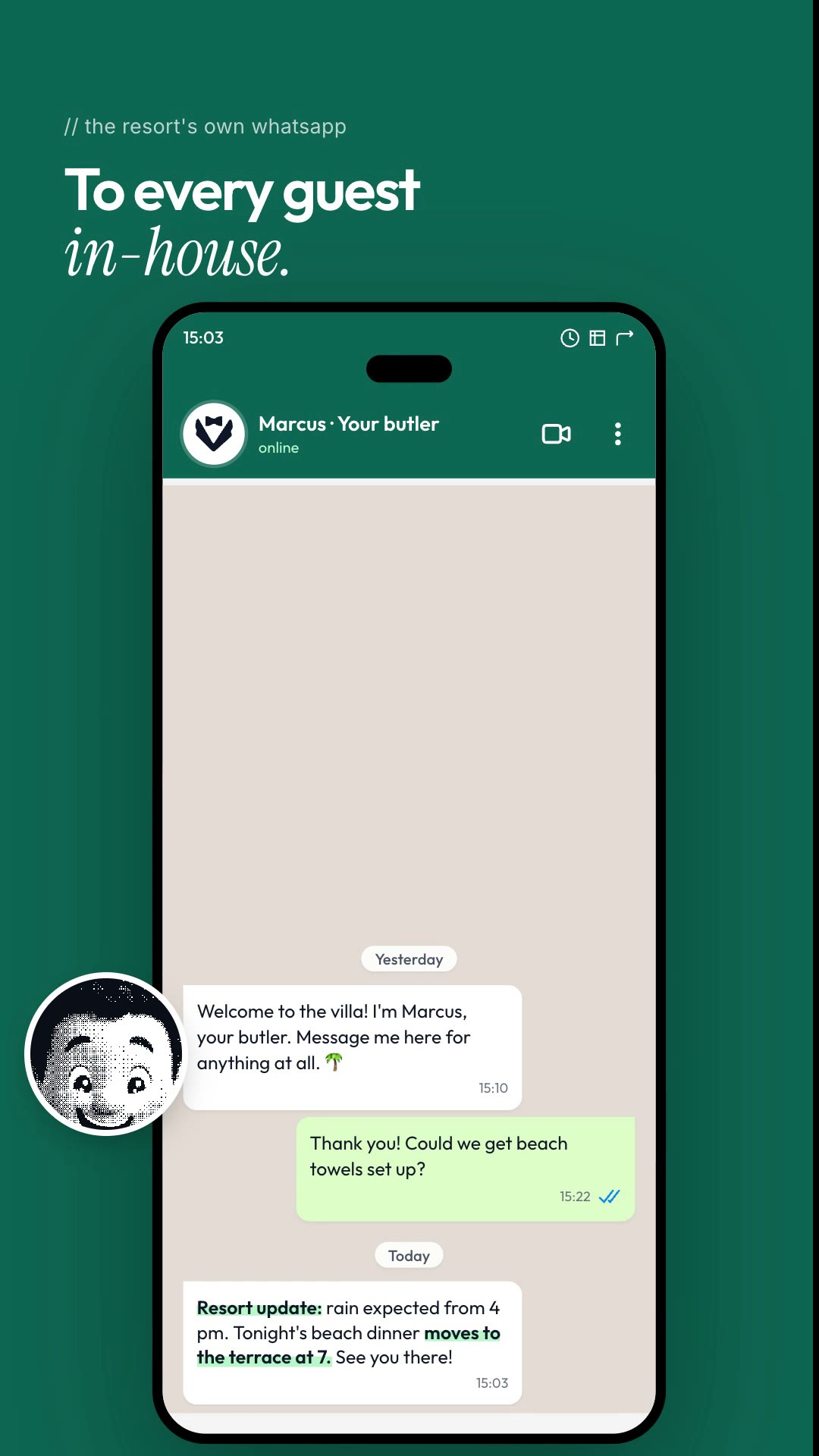
Two details are worth stressing. First, the message comes from the resort's own number, the same one guests already use for their butler, which is why it feels like part of the service rather than a mass text. This is the thinking behind one resort WhatsApp number. Second, the audience is simple to define, in-house guests, so nobody has to rebuild a list by hand before sending. If you want the delivery side, WhatsApp delivery status for hotel staff explains how staff can see what happened to each message, and WhatsApp instant messages for every stage of a stay shows the other moments in a stay where a timely message helps.
And when the guest replies
A broadcast is rarely the end of the conversation. The guest writes back: can we still do the mezcal tasting? That reply is not lost in a group or a notification. It lands as a request with their butler, with the history of the stay alongside it. It is the same ownership model described in how the personal butler model works on WhatsApp: the guest keeps one conversation, and every request has an owner.
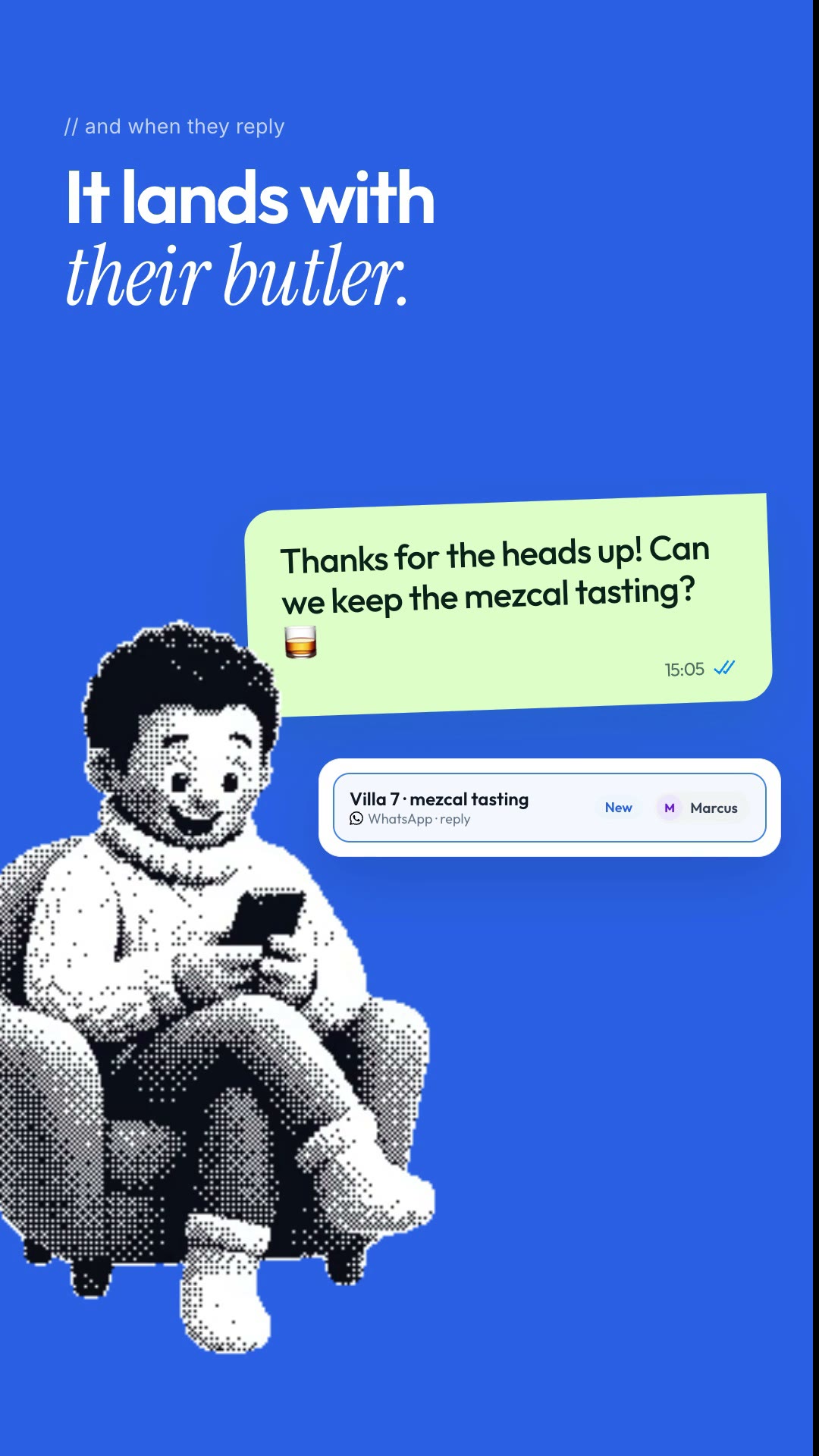
This is the part most broadcast tools skip. A weather note almost always provokes a question, a change or a thank-you, and each of those is a real request. If the reply lands in a shared inbox nobody owns, the guest feels ignored precisely when the resort just reached out. In Butler AI the reply goes to the guest's butler with the stay's history beside it, so the conversation continues rather than restarts.
A simple routine for resort-wide updates
If you want to put structure around your own updates, this is a pattern that works whatever software you use:
- Decide the audience first: in-house guests, a specific arrival day, or one event.
- Lead with what changes for the guest, then the new time and place, then who to ask.
- Offer one easy next step, such as replying to keep a booking or move it.
- Have an owner ready for replies before you send, so questions are answered quickly.
- Check the record afterwards: what was sent, to whom and what came back.
What this changes for ops
The resort decides the message once. Butlers spend their time on the guests who reply, not on copying the same update into thirty conversations. And operations can see the update went out from the resort's own number rather than from individual handsets, which also keeps the record where it belongs. When broadcasts are used for offers rather than alerts, AI-drafted guest broadcasts goes deeper on drafting and results, and the wider picture sits in the product overview.
Questions we hear from ops teams
Is a broadcast the same as a group chat?
No. Each guest receives the message in their own one-to-one conversation, so replies stay private and land with the right butler.
Does this replace the personal touch?
It sits alongside it. Butlers still talk to their guests directly. See how the personal butler model works on WhatsApp.
Where does the resort see what went out?
The message is sent from the resort's number, so the record sits with the resort and not on a personal handset. See Butler AI for butler operations.
If you run a butler programme and want to see a weather update go from draft to every villa, see a demo, read more about resort butler service software, or book a demo at heybutler.io.